Roof Soffit Lighting - A Practical Guide
Roof soffit lighting can create a subtle continuous line that emphasises the shape of a house, or it can become an advanced decorative system with independent zones, colour control and dynamic effects. The key decisions concern supply voltage, LED strip type, control method, installation protection and profile placement.
This guide compares 12 V, 24 V and 230 V systems, explains the differences between single-colour, RGB, RGBW, RGBCCT and digital LED strips, and shows why an aluminium profile with a suitable diffuser should be treated as a fundamental part of a soffit installation.
Roof soffit lighting is more than decoration
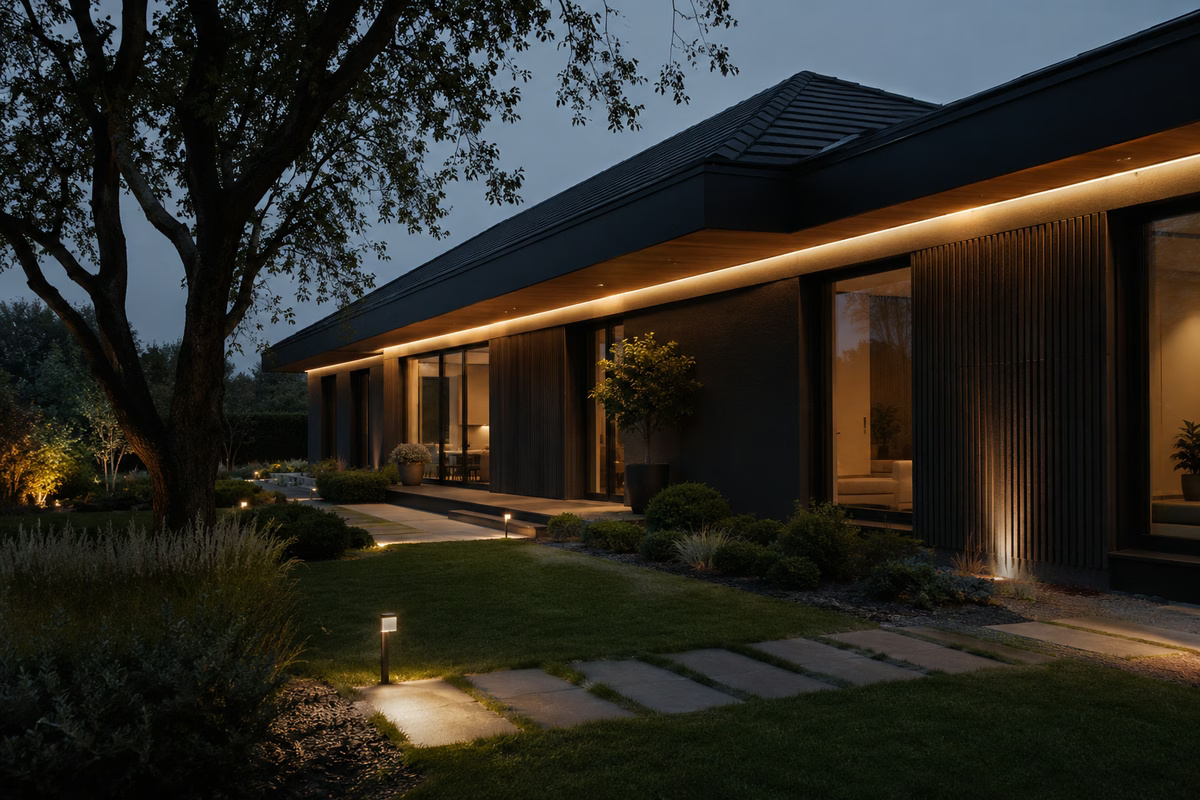
A well-designed line of light beneath the eaves organises the night-time appearance of a building, highlights its proportions and improves orientation around the property. It may subtly outline the architecture, illuminate a terrace or entrance, or become part of lighting scenes covering the façade and garden.
The final result depends on much more than strip wattage and colour. Long-term reliability is also determined by supply voltage, voltage drop, controller load, cable size, connection sealing, thermal management and future service access.
Define the desired effect before choosing an LED strip
Before purchasing components, decide how the light should work. Three arrangements are particularly common:
- a line close to the outer edge of the soffit – clearly outlines the eaves and remains visible from the garden;
- a line recessed towards the façade – creates a softer effect and may gently wash the wall;
- several independent zones – for example, separate control for the entrance, terrace, garage and remaining elevations.
It is also important to decide whether the lighting is mainly functional or decorative. Warm or neutral white is usually sufficient for calm architectural lighting. If the system should transform the appearance of the house for gatherings, holidays or special events, RGB, RGBW, RGBCCT or digital LED strips can be used.
12 V, 24 V or 230 V – what does the voltage actually change?
In a constant-voltage installation, power, voltage and current follow the relationship P = U × I. For the same power, a 12 V load draws approximately twice the current of a 24 V load.
This matters for cables, connectors, power supplies and controllers. If a controller can carry a maximum current of 10 A, its theoretical power capacity is:
- 120 W at 12 V;
- 240 W at 24 V.
A real project must also take account of per-channel limits, total load, operating margin, temperature and the manufacturer's instructions. The principle remains straightforward: moving from 12 V to 24 V transmits the same power at a lower current.
| Voltage | Main benefits | Main limitations | Typical application |
|---|---|---|---|
| 12 V | Very wide selection of strips and controllers; convenient for smaller zones | Higher current at the same power; voltage drop and controller current capacity become more critical | Shorter runs, local zones and upgrades to existing systems |
| 24 V | Lower current, better use of controller capacity and easier design of longer lines | All components must support 24 V; additional power-injection points may still be required | Long soffit lines, RGB/RGBW/RGBCCT and digital systems |
| 230 V | Very long runs can be created without a conventional 12/24 V power supply | Much higher safety requirements; more limited control; connections depend on the specific system | Long, uniform white lines where minimising power-feed points is the priority |
When does 12 V make sense?
A 12 V system works well for shorter runs and smaller zones. It is also appropriate when a particular strip or controller is available only in a 12 V version. Total current must be monitored carefully. A large installation may require more controllers, amplifiers or separate circuits.
Why is 24 V often the best compromise?
For soffit installations extending over several or many metres, 24 V usually simplifies the design. Lower current reduces the load on control paths and cables, and allows more effective use of the same controller. It does not eliminate voltage-drop calculations or power injection, but it often reduces the number of required power points and control devices.
A colour option is the 24 V RGB LED strip with 120 LEDs/m. When used beneath a soffit, it must be protected by a suitable profile and a complete, correctly designed mounting system.
230 V – long runs with greater responsibility
Selected 230 V LED-strip systems can support runs of up to 50 m without additional power injection, provided this length is permitted by the documentation for the specific strip and all associated accessories. Available examples include a 230 V warm-white LED strip and a 230 V neutral-white LED strip.
The trade-off is less control flexibility than with 12 V and 24 V systems. A 230 V strip is best treated as a solution for long, uniform lines rather than the default platform for advanced multi-channel control and dynamic effects.
Which type of LED strip should be used?
Single-colour strip
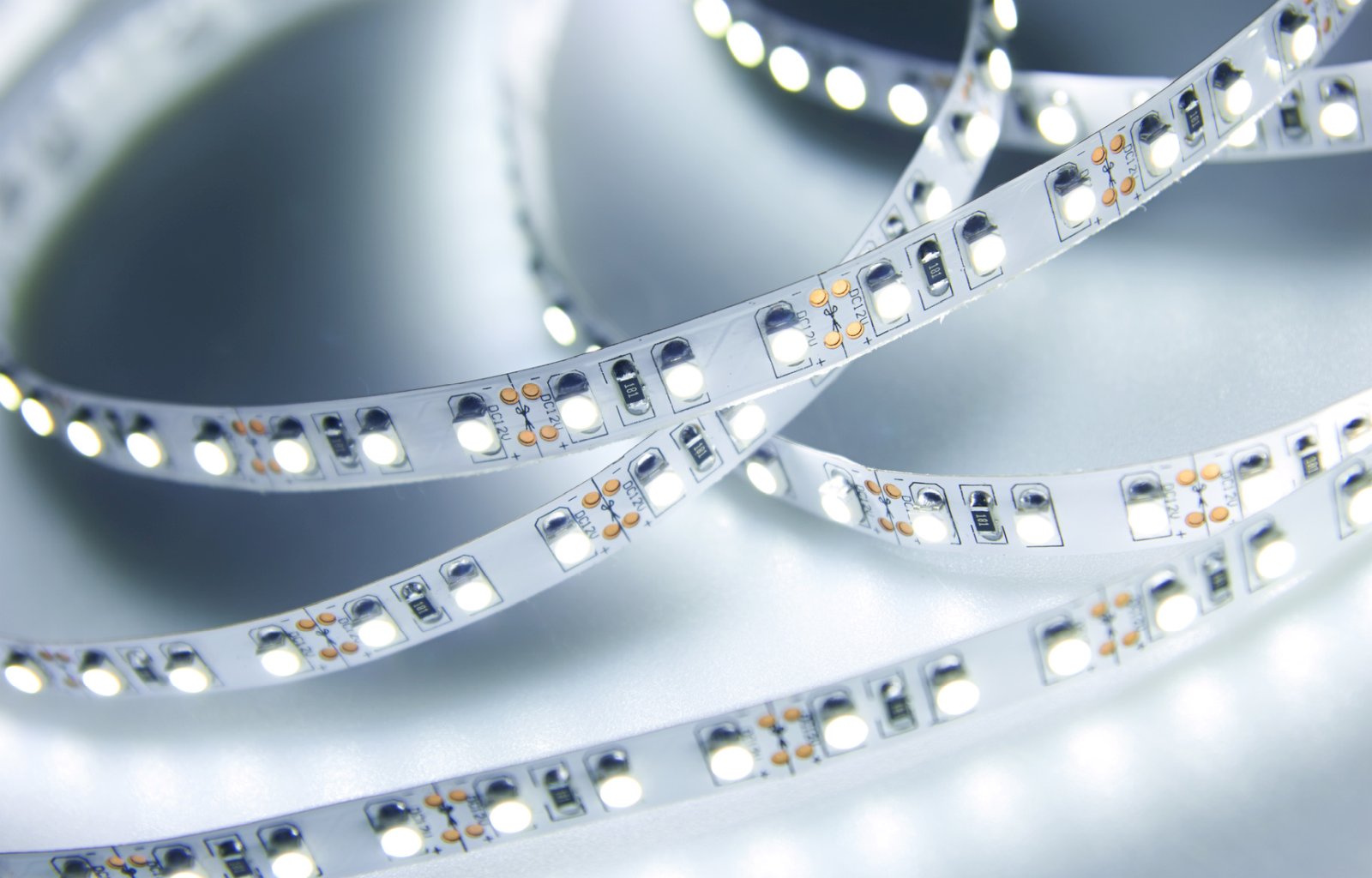
This is the simplest and most frequently selected option. Warm, neutral or cool white can be used, as well as monochromatic red, green, blue, violet, pink or amber strips. A single-colour strip uses one control channel, making dimming and zoning straightforward.
Warm white works well with timber, brick and dark façades. Neutral white emphasises modern architecture and provides a cleaner, more technical appearance. Cool white creates a very distinct effect, although it may feel harsher on residential buildings.
RGB, RGBW and RGBCCT
RGB mixes colours, but the white created from three colour channels is normally decorative. RGBW adds a dedicated white channel, allowing the same installation to provide functional white light and colour effects. RGBCCT also enables adjustment of white colour temperature from warm to cooler tones.
When selecting a controller, check not only the supply voltage but also the number of channels, total permitted current and the limit for each channel. The 12–24 V RF RGBW LED controller is a good example of why voltage and load must be considered together.
Digital LED strips – the highest level of effects
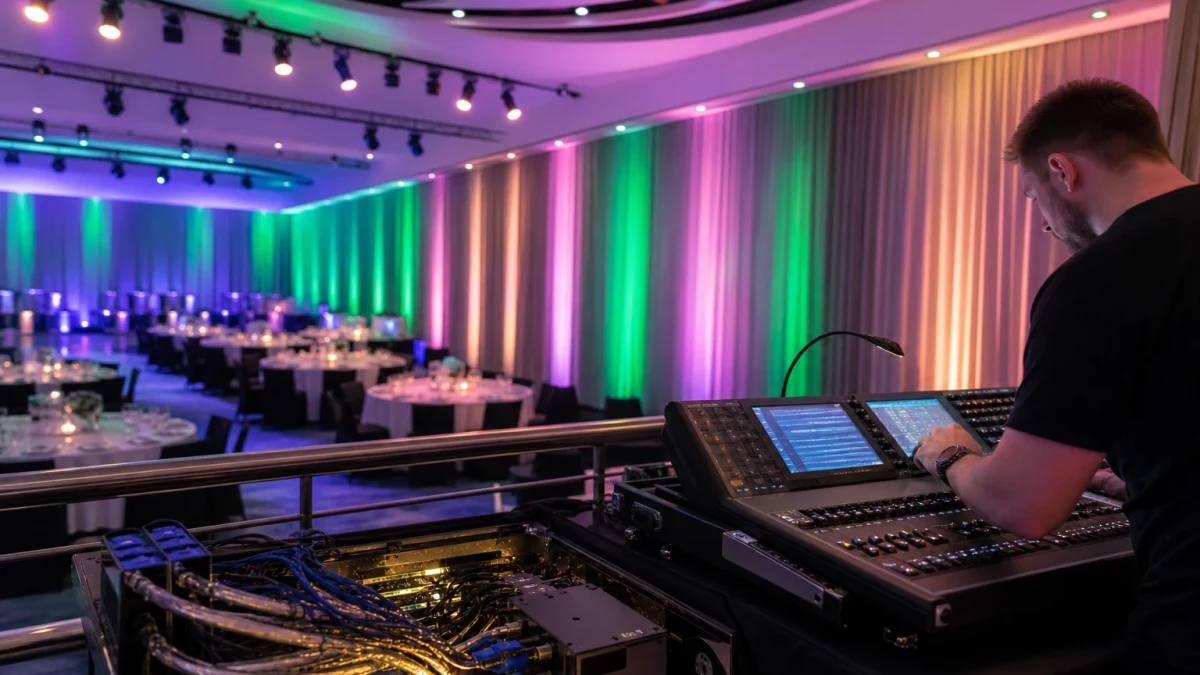
A digital, addressable or ARGB strip allows individual pixels or sections to be controlled independently. It can create static colour divisions, smooth transitions, waves, animations and moving effects along the eaves.
An example is the 24 V WS2811/SPI ARGB digital LED strip, which can be paired with a WLED-compatible Wi-Fi controller. Such a system requires careful planning of the data line, power supply, power-injection points and weather protection of every connection.
The LED profile is a mandatory component in the LEDownia standard
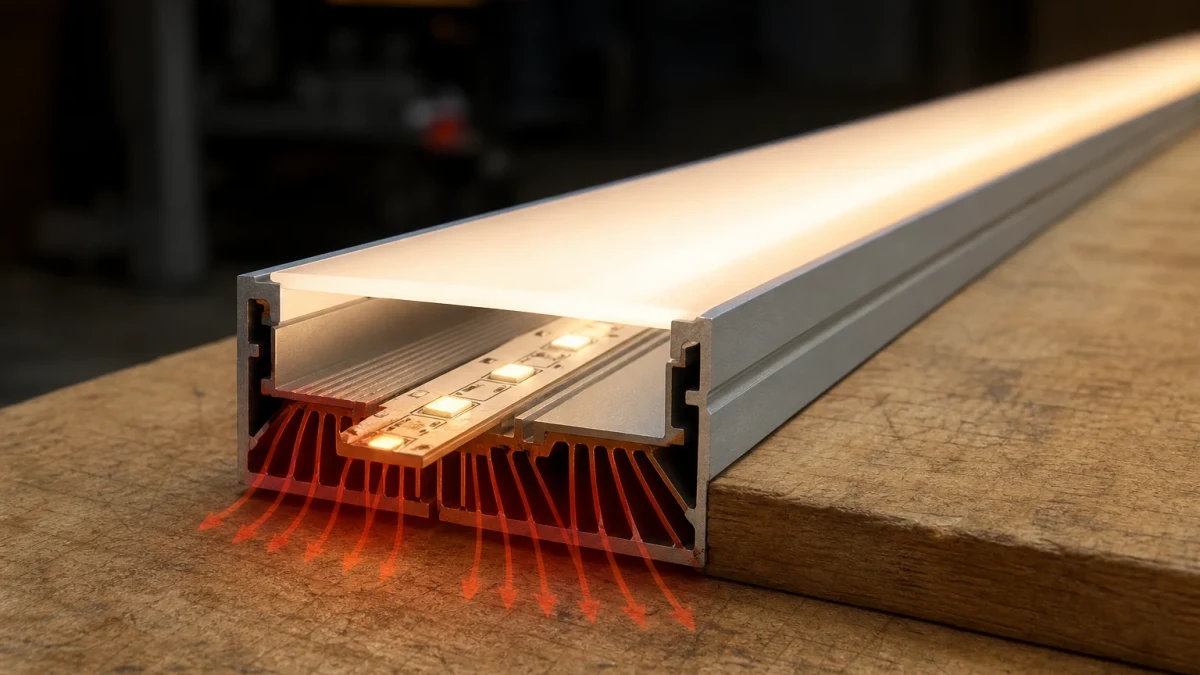
For durability and serviceability, LEDownia treats an aluminium profile as mandatory in a soffit installation, regardless of the IP rating declared for the strip itself. A profile:
- protects the strip against accidental damage and direct environmental exposure;
- stabilises the mounting method and keeps the line straight;
- helps dissipate heat;
- accepts a diffuser that improves the appearance of the light;
- simplifies future service and replacement.
The diffuser is just as important as the profile. It should withstand ultraviolet radiation and outdoor exposure so that it does not quickly yellow, become cloudy or alter the perceived colour of the light. A suitable option is a 2 m surface-mounted aluminium LED profile with a milky diffuser.
An IP rating applies to a specific enclosure or product. The resistance of the complete installation is determined by its weakest element: a connection, strip termination, cable entry, power supply, controller or profile joint. A high-IP strip cannot compensate for an inadequately protected connection.
Power supply, controller and cables – design the complete system
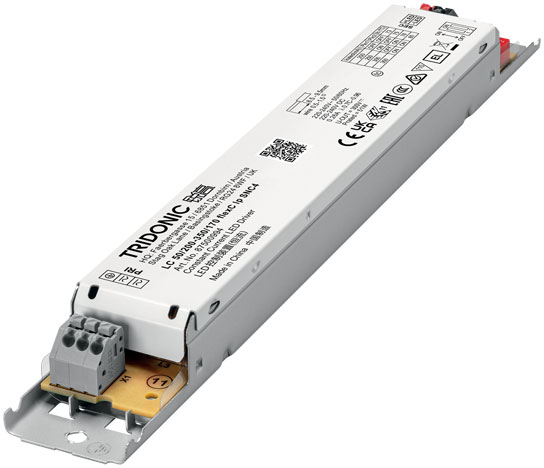
A frequent mistake is to select the LED strip solely by appearance and only then search for a power supply and controller. The correct order is the opposite: calculate the power of all sections, divide the installation into zones and decide where the power and control devices will be installed.
- Strip power: multiply the length of each section by its wattage per metre.
- Operating margin: the power supply and controller should not operate continuously at their maximum rating.
- Current: check the total load and the limit of every channel.
- Voltage drop: higher current and longer cables increase the risk of uneven brightness.
- Service access: do not permanently enclose power supplies and controllers in inaccessible spaces.
For a 24 V digital system, a dedicated 24 V 200 W power supply for ARGB strips can be used, but its capacity must always be confirmed by calculations for the actual installation.
Safety of a 230 V installation
A 230 V strip and its cables, connectors and terminations operate directly at mains voltage. Connections must be executed perfectly, in accordance with the system documentation and with full responsibility for protection against electric shock, moisture, mechanical damage and overheating.
The installation should be designed and completed by qualified personnel. The choice of protective devices, cables, isolation methods and installation locations depends on the conditions of the building and cannot be determined from a general guide alone.
The IEC 60364 series covers requirements for external lighting installations, while IEC 60529 defines the classification of enclosure protection against access, solid objects and water. Mains-powered equipment must also comply with the relevant European safety requirements.
How to plan roof soffit lighting step by step
- Measure every section and record corners, gaps, gutters and cable routes.
- Choose the character of the light: white, coloured, adjustable CCT or digital.
- Divide the building into zones so that the entire system does not have to be controlled by one channel.
- Select the voltage based on length, power, control method and available power-supply locations.
- Calculate power and current separately for each zone.
- Select profiles and diffusers and plan their joints and water management.
- Design cables and power-injection points before the soffit is closed.
- Provide service access to power supplies, controllers and connections.
- Test the entire system before the profiles and soffit are finally closed.
Common mistakes
- installing the strip without an aluminium profile;
- using a diffuser that quickly yellows in sunlight;
- selecting a controller by channel count without checking current;
- providing no operating margin for the power supply and controller;
- feeding overly long sections from one end only;
- leaving connections exposed to water;
- enclosing a power supply without ventilation or service access;
- treating the strip's IP rating as protection for the entire installation;
- choosing 230 V only because it simplifies power distribution, without evaluating the safety and control consequences.
Summary
There is no single voltage that is best for every soffit. 12 V works well for smaller zones, 24 V is usually the most practical choice for long lines and advanced control, while 230 V can simplify the supply of very long, uniform runs but demands the greatest installation care.
Whichever system is selected, the complete installation must be designed as one system: strip, profile, diffuser, cables, power, control, sealing and service access. Only this approach produces a result that still looks and works properly after many seasons.
Frequently asked questions
Can an LED strip be installed beneath a soffit without a profile?
LEDownia does not recommend it. A profile improves mechanical protection, cooling, appearance and serviceability, while a suitable diffuser protects the optical part of the system.
Does 24 V always provide a longer run without power injection?
No. The permitted length depends on strip construction, power per metre, copper-track size and the supply method. A 24 V system reduces current for the same power, but calculations are still required.
Does RGB provide good functional white light?
RGB can create the impression of white by mixing colours, but RGBW or RGBCCT with a dedicated white channel is a better option for everyday white lighting.
Can every LED in a digital strip be controlled separately?
It depends on the strip. Some products control individual LEDs, while others control groups of LEDs that form one addressable pixel or segment.
Can a 230 V installation be completed as a DIY project?
Because it operates at mains voltage and is installed outdoors, its design and installation should be entrusted to a suitably qualified and experienced professional.
Contact us — we will help you choose the right solution
Choose your preferred contact method