
How to find the right LED power supply?
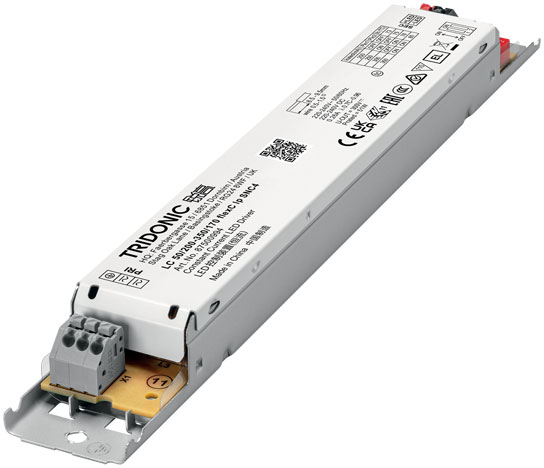
LED power supply selection guide: read the nameplate, identify CV vs CC, choose safe power headroom, verify IP rating, and check mounting dimensions. If your exact model is unavailable or you are unsure what to search for, we will recommend the right PSU or a true equivalent.

Table of contents
- 1) Nameplate: what to read
- 2) CV or CC: how to identify
- 3) Power headroom: safe selection
- 4) IP rating: environment and mounting
- 5) Dimensions: when space is limited
- 6) Unavailable model: equivalent replacement
- FAQ
1) Nameplate: what to read
Start with what is printed on the PSU. Take a clear photo of the label. Key fields: Output, Voltage, Current, Power, IP, and sometimes Dimensions.
What to capture
- Output: voltage or current, power, current or voltage.
- Input: mains range (for example 200-240V AC).
- IP: for example IP20, IP33, IP65, IP68.
- Dimensions: if installation space is limited.
2) CV or CC: how to identify
Constant Voltage (CV)
CV units always show a fixed output voltage: 12V, 24V, 5V, etc. This is standard for LED strips and many LED modules.
Example:
Output: 12V, 100W, 8.33AConstant Current (CC)
CC drivers are often labeled Constant Current Power Supply and specify output current such as 350mA, 500mA, 700mA. The label usually also shows max power and an operating voltage range.
Example:
Output: 700mA, 50W, 18-72VCC: minimum operating voltage matters
A CC driver has a lower voltage limit. If the load is too small and the operating voltage drops below the minimum, it may not work correctly.
Adjustable current CC drivers
If you see Configurable, Flex Current, or Adjustable Current, the driver can be set to one of several output current values.
3) Power headroom: safe selection
Choose headroom. It improves stability, reduces heat, and extends lifetime.
- Recommended headroom: 20-30% above the real load.
- For enclosed installations and continuous use: aim closer to 30%.
4) IP rating: environment and mounting
- IP20 - indoor, dry areas.
- IP33 - light protection.
- IP65 - moisture and splashes.
- IP68 - demanding environments.
Sometimes a different IP rating than the original PSU can be used, but the decision depends on real conditions. If it matters, consult our specialist.
5) Dimensions: when space is limited
In many installations, size is the constraint. Verify length, width, height, and cooling conditions in the mounting space.
6) Unavailable model: equivalent replacement
There is always a solution. A correct replacement can always be matched to the requirements. If your model is unavailable or you are unsure what to search for, we will recommend the right PSU or a true equivalent.
FAQ
How do I tell if a PSU is CV or CC?CV shows a fixed output voltage (12V or 24V). CC shows output current (for example 700mA) and often says Constant Current Power Supply.
What does Output: 12V, 100W, 8.33A mean?It is a 12V constant voltage PSU. Max power is 100W and max output current is 8.33A.
Can I use a higher power PSU?Yes. The load draws only what it needs. Keep the key parameters correct: CV or CC and voltage or current. Although there are CC power supplies which work best being loaded by almost 100%.
Can I replace an IP rated PSU with a different IP rating?Sometimes yes, depending on real conditions. If it matters, consult our specialist to avoid risk.
I do not know what PSU I need. What should I send?Send a nameplate photo, available installation dimensions, load type, and environment details. We will recommend the correct solution.
LEDownia
LED power supply - request for selection
Send inquiryBest start: A photo of the nameplate, information about any size limitations, operating environment, and the powered luminaire. Leave your phone number and email address.