

LED Panels in Technical Terms: Types, Parameters, Advantages, and Disadvantages
Thin edge-lit LED panels are attractive where installation depth is extremely limited, but backlight panels usually offer better efficacy, thermal behavior, and long-term durability. Here is why the construction difference matters in practice.

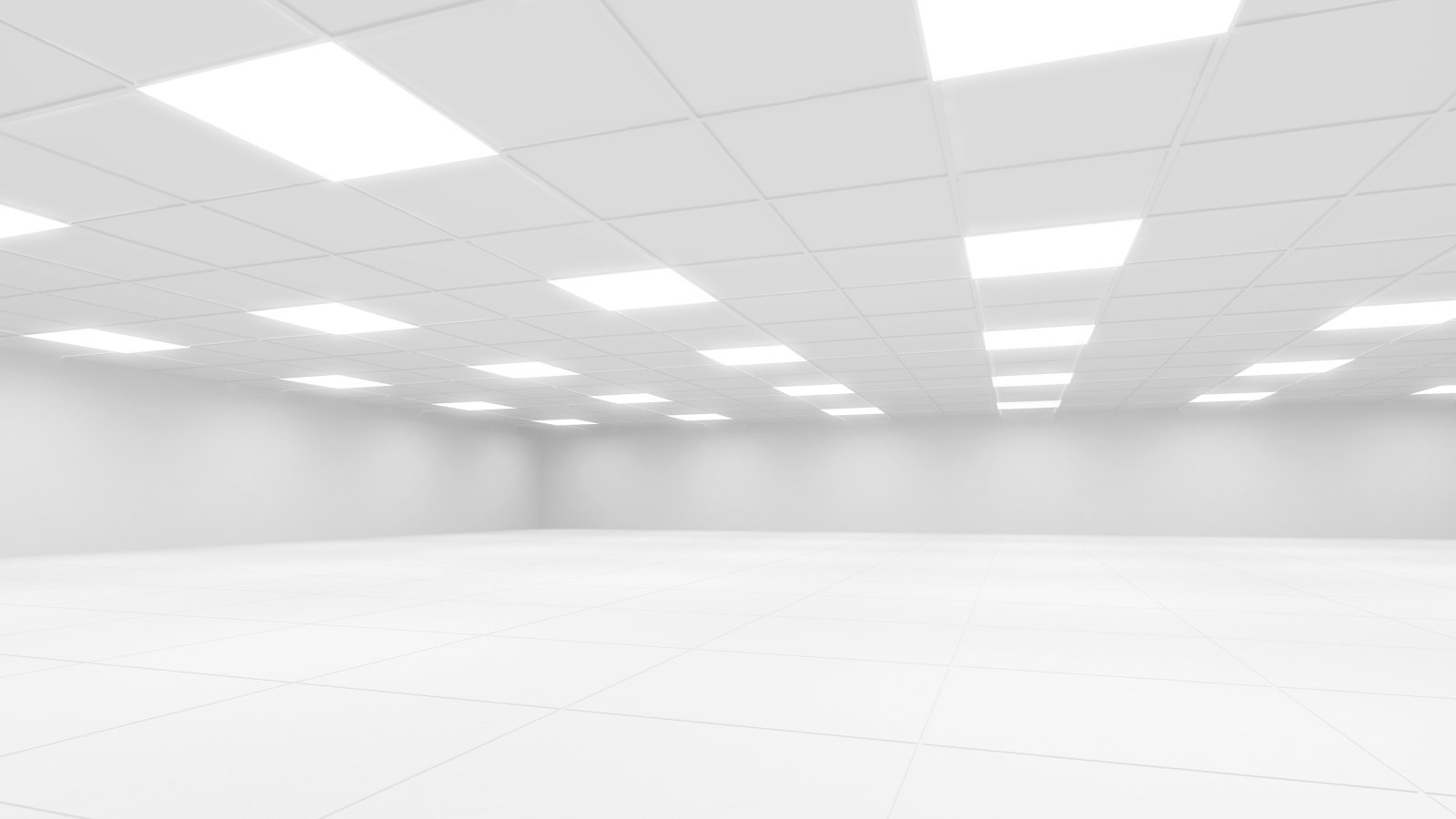
Thin edge-lit LED panels became popular mainly because of their very low profile. In this design, the LEDs are placed along the edges and the light is guided across the panel through a light guide plate and additional optical layers before it is diffused downward. The result can look sleek and modern, especially where the ceiling void is shallow. However, low thickness alone does not automatically mean better engineering.
When the priority is not just appearance but also efficiency, durability, thermal stability, and long-term visual consistency, backlight panels usually have the technical advantage. In a backlight panel, the LED source or LED modules shine from the rear side directly toward the diffuser. The optical path is simpler, optical losses are typically lower, and the luminaire generally has a better foundation for long service life.
Why is there a difference between edge-lit and backlight panels?
Edge-lit: a design optimized for minimum thickness
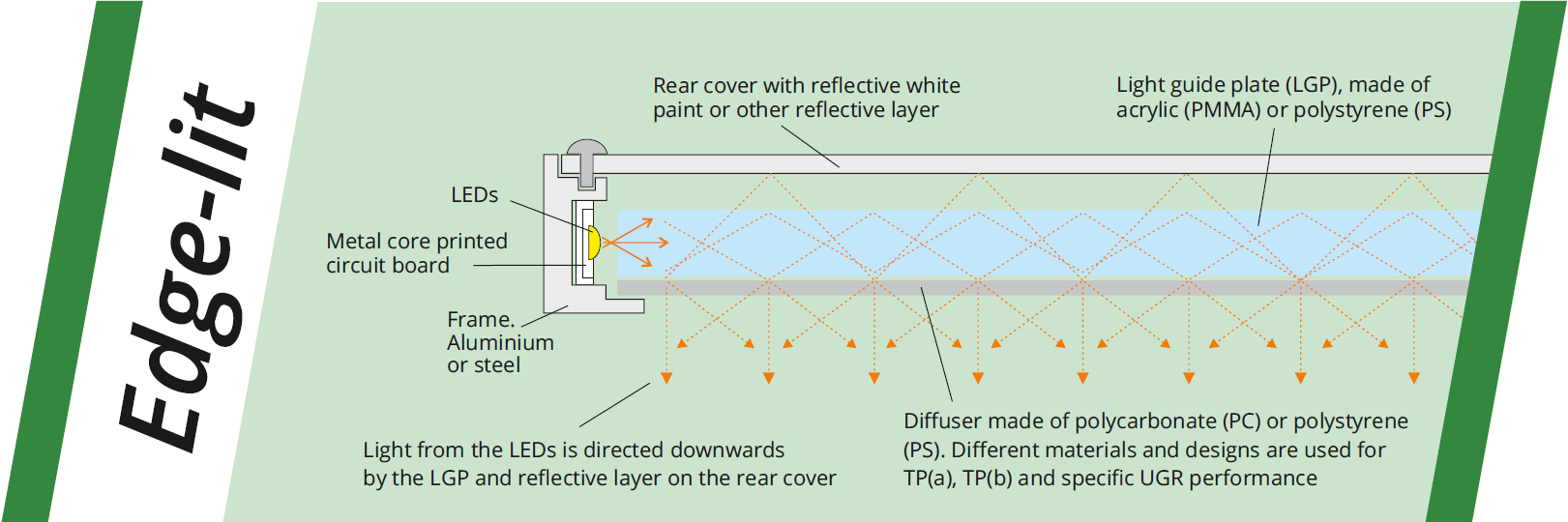
In a thin edge-lit panel, the LEDs are usually concentrated around the perimeter. Their light enters a light guide plate, travels across the body of the panel, and then passes through optical layers before the diffuser creates the visible luminous surface. This approach makes an extremely slim luminaire possible, but it also introduces additional stages where light output can be lost.
That is why thin panels are often chosen not because they are technically superior, but because they must fit where installation depth is extremely limited. In other words, edge-lit can be justified when ultra-low profile is the dominant requirement. Once durability and performance become more important than thickness, it becomes a compromise.
Backlight: a simpler optical path with fewer losses
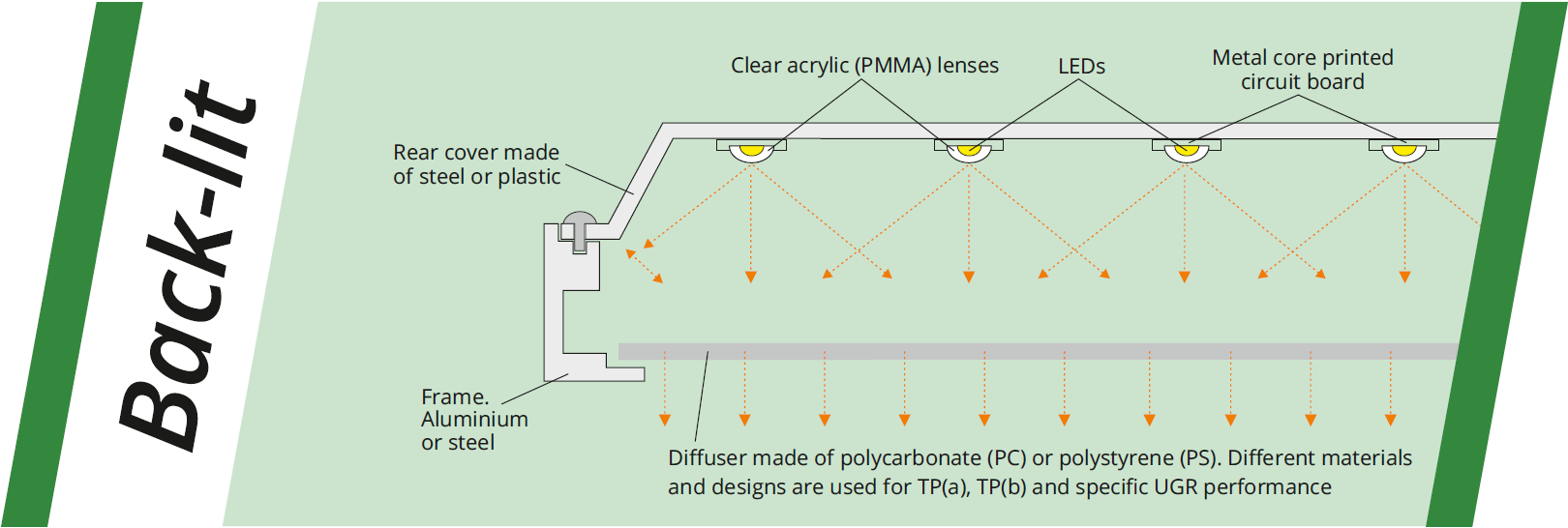
In a backlight panel, the LEDs or LED modules are located behind the diffuser and emit light directly toward it. The luminaire does not rely as heavily on a light guide plate and a complex optical stack. In practice, this usually means fewer optical losses, better luminaire efficacy, and more predictable behavior over time.
Of course, not every backlight panel is automatically a high-end product. LED quality, driver quality, housing design, and thermal management still matter. But as a concept, backlight usually starts from a stronger technical position than edge-lit.
Why do backlight panels usually offer the technical advantage?
1. Higher efficacy
One of the strongest arguments is efficacy. In an edge-lit panel, part of the light output is lost in the light guide plate, in the optical films, and in the entire process of redistributing the light from the edges toward the center. In a backlight panel, the light path is more direct, so a well-designed product more often delivers better lm/W performance at a comparable quality level.
For the end user, this means something very practical: more usable light from the same power input, or the same lighting effect with lower energy demand. In installations operating many hours per day, that difference matters.
2. Better heat dissipation and longer lifetime
LED systems do not perform well under excessive heat. Poor thermal conditions accelerate lumen depreciation, color shift, driver aging, and the wear of other luminaire components. In thin edge-lit panels, the LEDs work close to the edges and the entire product is built around minimum thickness. That does not usually help thermal comfort.
Backlight panels typically allow more room for a sensible distribution of the LED source and better cooperation with the metal housing as a heat-spreading structure. In practice, that usually supports more stable operating conditions and longer luminaire life.
3. Lower risk of yellowing at the edges
This is one of the most visible real-world drawbacks of thin panels. In edge-lit products, the edge zones can be more thermally stressed, and the optical materials may age unevenly over time. The result may be yellowish borders, poorer aesthetics, and less uniform visual appearance.
That does not mean every edge-lit panel will develop this problem, and it does not mean every backlight panel will remain perfect forever. Still, edge yellowing is much more commonly associated with thin edge-lit constructions than with properly designed backlight panels. Because the light source is not concentrated around the perimeter in the same way, the risk of localized discoloration is usually lower.
When does a thin LED panel still make sense?
A thin panel is not inherently a bad product. It has a valid place in the market. Its main advantage is its very low installation depth. If the luminaire has to fit into an extremely shallow ceiling void, recess, or architectural detail where every millimeter matters, edge-lit may be the only practical solution.
In such cases, the compromise can be justified. But where there is enough space, choosing a thin panel only because it is thin often means giving up the technical advantages of backlight construction without a strong practical reason.
Practical conclusion
If the priority is long-term durability, stable performance, good energy efficiency, and a lower risk of visible aging, a backlight LED panel is usually the more technically justified solution. It offers a simpler light path, typically better efficacy, and better conditions for thermal management. That usually translates into more predictable long-term performance.
Thin edge-lit panels should mainly be treated as a solution for projects where installation space is extremely limited and that requirement is more important than quality reserve and service life. In most standard applications, backlight is simply the more rational choice.
FAQ – Edge-Lit and Backlight LED Panels
Sources
- U.S. Department of Energy – LED Luminaire Lifetime: Recommendations for Testing and Reporting
- LEDVANCE – LED light panels for backlighting
- NVC Lighting – What is the difference between edge-lit and back-lit LED panels?
- International Journal of Extreme Manufacturing / review available via ScienceDirect – Color shift in LED packages and optical materials
Contact us to solve Your problem
Just click the right action
Same category
- What is color?
- LED Is More Than Efficiency: 5 Facts That Change How You See Light at Home
- SMD 3528 vs SMD 2835 – what are the differences and which LED strip should you choose?
- 5050 LEDs – types, power ratings, manufacturers and applications
- COB LED Strips – What Are They and How Do They Differ from SMD Strips?