- Online only


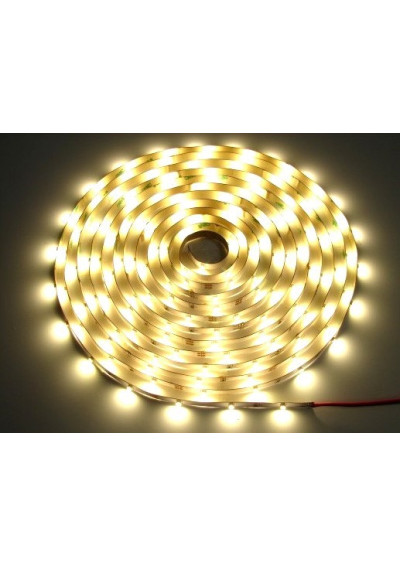
LED strip SMD 3528 12V 19.2W/m cool white 240LED/m IP33 5m
| LED technology | SMD |
|---|---|
| LED package | 3528 |
| Light type | single colour |
| Colour temperature | 6000 K |
| Power supply | 12 V DC |
| Power | 19.2 W/m |
| Current consumption | 1.6 A/m |
| LED density | 240 LED/m |
| Channels no. | 1 channel |
| IP rating | IP33 |
| Warranty | 2 years |
| Sales unit | reel, 5 m |
| Quality tier | standard |
| LED technology | SMD |
|---|---|
| LED package | 3528 |
| Light type | single colour |
| Colour temperature | 6000 K |
| Power supply | 12 V DC |
| Power | 19.2 W/m |
| Current consumption | 1.6 A/m |
| LED density | 240 LED/m |
| Channels no. | 1 channel |
| IP rating | IP33 |
| Warranty | 2 years |
| Sales unit | reel, 5 m |
| Quality tier | standard |
 Delivery
1-3 dni (PL), 3-10 dni (non-PL)

Privacy Policy
 Return Policy
14 days
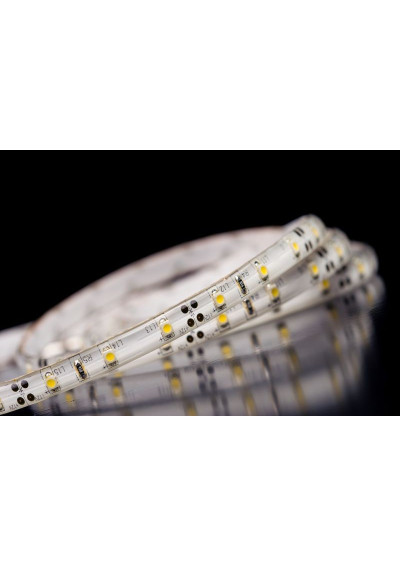
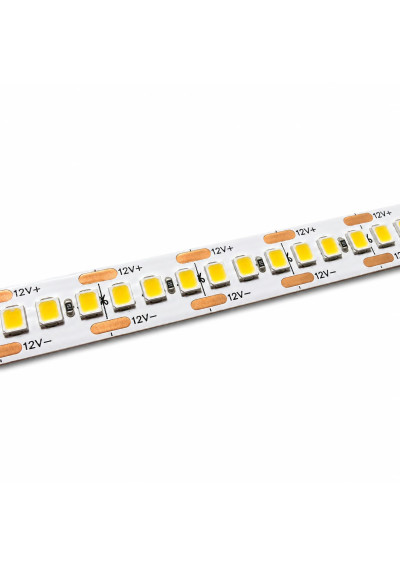
The strip uses SMD technology with LEDs in a 3528 package. The underside has factory-applied double-sided adhesive tape to aid installation on a suitably prepared surface.
The strip can be powered directly from a suitable 12V power supply. An optional PWM controller enables brightness adjustment.
The stated power is a rated or theoretical value based on the parameters of the components used. Actual power consumption may be lower due to component tolerances, voltage drop and operating conditions.
The strip does not require an additional power-injection point when its length does not exceed 5m. Above this length, consider starting the next separately powered run, supplying the run at its far end, or adding another power point after the indicated length.
The 5m value is based on the electrical properties of the strip PCB. It indicates the length at which supply-voltage drop should not cause a noticeable reduction in LED brightness along the length of strip. Above this length, a brightness difference may become visible. If it remains acceptable to the end customer, the final power-feed arrangement is the responsibility of the installation designer or user.
The presented white LED strip is a single-channel light source with a color temperature of 6000K. All LEDs emit the same color and are controlled simultaneously, providing uniform and stable illumination.
In most white LEDs, light is produced through a phosphor-conversion process. A blue semiconductor chip emits short-wavelength radiation, part of which is converted by a phosphor layer into longer-wavelength visible light. The combination of the original blue light and the radiation emitted by the phosphor creates a broad spectrum perceived by the human eye as white light.
The composition and proportions of the phosphor materials make it possible to control the color temperature, tint, luminous efficacy, and color rendering quality with high precision. In high-quality LEDs, a properly engineered spectrum can faithfully reproduce the natural appearance of illuminated objects and colors, bringing the character of the emitted light close to daylight or traditional incandescent lighting. Particularly important factors include a high color rendering index, the correct balance of spectral components, and strict LED binning for color consistency. As a result, in typical applications, the light produced by a high-quality LED strip can be visually very difficult to distinguish from that of natural or traditional light sources.
During operation, an LED ages gradually rather than failing suddenly through a conventional “burnout.” The most commonly observed process is a slow reduction in luminous flux over time. High operating temperatures can accelerate degradation of the semiconductor structure, phosphor, package materials, and electrical connections. Over time, the phosphor may lose some of its conversion efficiency, while optical materials may become discolored, leading to a slight shift in color temperature or chromaticity coordinates.
In high-quality LED strips, this aging process is slow, uniform, and predictable. Proper thermal management, stable power supply, and installation in a suitable aluminum profile reduce the operating temperature, helping to preserve the original brightness and light color for many years.
For static operation, the strip does not require a controller — a correctly selected power supply is sufficient. Brightness adjustment requires a compatible single-channel LED dimmer or controller, most commonly using PWM modulation.
The strip operates at 12V and has a density of 240LED/m with an IP33 ingress-protection rating.
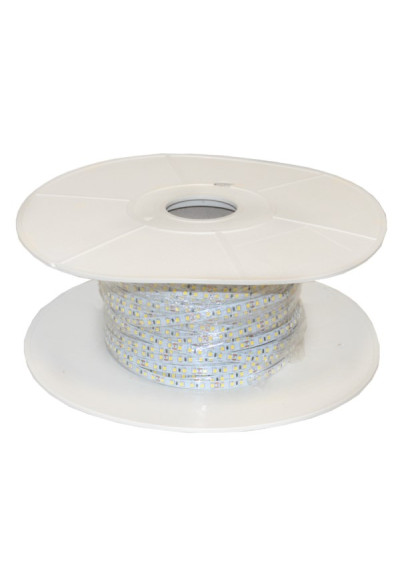
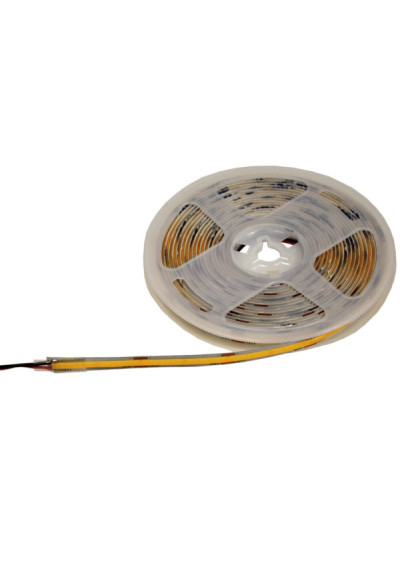
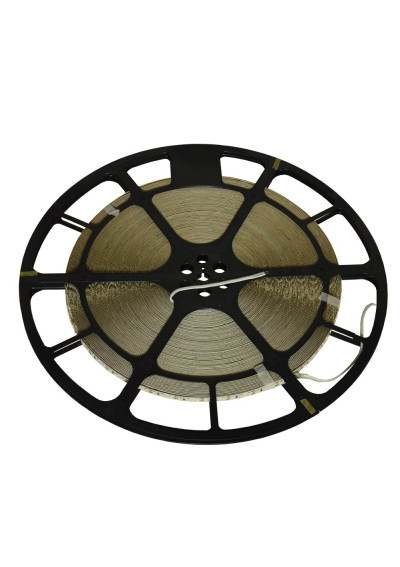
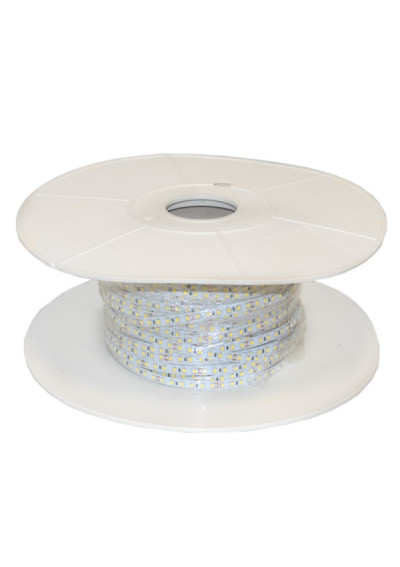
The sales unit includes a factory-prepared reel of LED strip with a length of 5m.
The strip requires a power supply with an output voltage of 12V. Guidance: select a power supply with an optimum 30% power reserve above the LED strip demand.
Premium cool white LED strip with an ultra‑high LED density that creates a clean, uniform line of light. It is built with selected SMD 3528 components for stable color and reliable work. Use it for modern interiors where contrast and clarity matter.
Choose a constant‑voltage power supply matched to the total wattage. Add a safe 20–30% power reserve for stable operation. Look for protections like OVP, OCP, SCP, and OTP. Models with active PFC can improve performance.
For longer runs, use power injection to avoid voltage drop and uneven brightness. Feed power about every 5 m for 12V systems, or every 10 m for 24 V systems. Use a star wiring layout and proper cable gauge. Protect connections from moisture outdoors.
The strip can be cut only at marked cutting points. Connect sections using soldering or quality connectors. The adhesive backing speeds up mounting. An aluminum profile helps cooling and improves durability.
Upgrade your project with a premium light line and expert support. Add this strip to your cart and buy now.
See also: Other LED strips | LED power supplies | Controllers & dimmers

Data sheet